 Dr. Michael Wesch’s opening keynote at this year’s Society for Teaching and Learning in Higher Education conference in Toronto caused me to think deeply about social construction of knowledge – and how that might flavour my teaching this coming term, particularly with graduate students in education. You may be familiar with Wesch’s video A Vision of Students Today Continue reading Social Construction of Knowledge: Wiki in Graduate School — Nicola Simmons
Month: August 2010
Restoring attention and memory by disconnecting?

For some time now, I’ve been (along with certain friends and colleagues) advocating for at least occasional Slow experiences in higher education teaching and learning. Somewhat akin to Slow food (which of course has its detractors, Continue reading Restoring attention and memory by disconnecting?
Using Diigo Groups and RSS feeds in University Courses — Mark Morton
 Diigo is a social bookmarking platform that allows a user — or group of users — to bookmark, tag, and share interesting web resources. For example, if a CTE staff members comes across a web resource pertaining to teaching or learning, he or she can add it to the CTE Diigo group, available here. Diigo also allows you to create an RSS feed of your resources, which you can then embed into any web page. You can see an example of this on the CTE home page: the scrolling items on the left side of that page are recent items that have been added to our Diigo group. In a university course, an instructor might make effective use of these technologies by doing the following:
- Create a Diigo group for a course;
- Add students as users to that Diigo group;
- Encourage students to bookmark to that group any course-related web resources they come across;
- Pull the RSS feed from that Diigo group into the home page of the course so that resources are automatically displayed as they are added.
One of the resulting benefits is that it helps to foster a sense of collegiality and collaboration among students.
______________________________________
The Centre for Teaching Excellence welcomes contributions to its blog. If you are a faculty member, staff member, or student at the University of Waterloo (or beyond!) and would like contribute a posting about some aspect of teaching or learning, please contact Mark Morton or Trevor Holmes.
Collaborative presentation challenges through metaphor – Trevor Holmes
Recently I attended the biennial conference of the International Consortium of Educational Development (ICED), an organisation that brings together national Societies for higher education development, research, and practice. The conference crosses borders quite literally (it rotates around different continents), and the opportunities for intercultural learning are rich. My fourth ICED helped me to recharge my intellectual and practical batteries, and so I thought I would share some experiences on our CTE blog over the next weeks, beginning with a presentation in which I was involved (because I can remember it quickly and Mark is after me to get a blog entry done!).
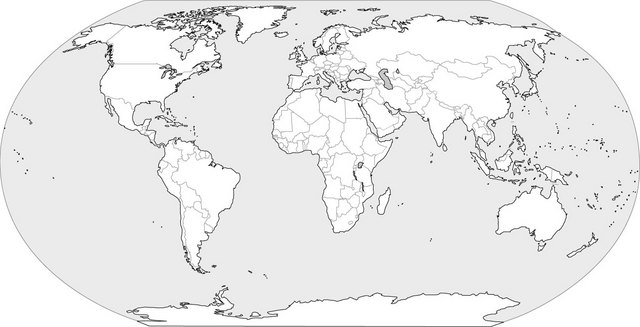
A bunch of folks from the Challenging Academic Development collective (formed some years ago after a creative session at ICED 2004) proposed a Symposium, in which we would present three thematically-linked presentations. The overall title was “Political Geographies of Academic Development: Neutral, Non-Neutral, or Marginal” and each section had multiple collaborators. My section was inspired by the question that also inspired a somewhat different presentation at Educational Developers Caucus this past February, that question being simply “If your university were the world, what country would your teaching centre be?”
This question arose as a response to an idea that a couple of us in the field had heard before, namely that our teaching centres must be “Switzerland.” Essentially, I wanted to question first the idea that we had to be neutral in our work, and second that Switzerland itself may not be a great metaphor for neutrality.
Hence this abstract and workshop for the section of the Symposium co-authored by myself, Beverley Hamilton (Windsor), Catherine Manathunga (Queensland), and Brad Wuetherick (Saskatchewan)…
*****************
The [im]possibilities of neutrality: metaphors of nation for academic developer identities
Universities are geopolitical spaces. Within the territorial spaces of post-secondary institutions, it is often said that academic development should be ‘like Switzerland’, meaning ‘neutral’ in contrast to other university zones. We argue that, the neutral zone in which academic developers work is a kind of fictional truth which allows us to operate without owning our actions in real terms. This session will explore the tropes of neutrality and engagement, also exploring other less dominant forms of neutrality (e.g. Ireland or Iceland) and other metaphors of national identity that can be applied to academic development in order to question what possibilities these tropes open up and close down.
*************
We found, just as a somewhat different group of us found at EDC, that this idea (University as nation, departments as countries) became a really good way in for people to think about their identities as scholars and developers, or as members of a support unit. What do you think? If your institution were the world, which country would YOUR department be? What do you think about the neutrality of the work we do as teaching centre employees? For me, it’s one thing to be confidential, respectful, ethical, responsible to those we support, and quite another to claim “neutrality” — which I think is really impossible in the end. There’s no positionless position, I think, from which to proceed in our work, even when we claim to be “only” facilitators rather than experts. That itself takes a position vis-a-vis the work.
______________________________________
The Centre for Teaching Excellence welcomes contributions to its blog. If you are a faculty member, staff member, or student at the University of Waterloo (or beyond!) and would like contribute a posting about some aspect of teaching or learning, please contact Mark Morton or Trevor Holmes.
eHarmony: CTE’s relationship with KSU — Mark Morton
 Recently, staff members in the Centre for Teaching Excellence went on a two-week “blind date” with 20 faculty members from King Saud University. I call it a blind date — even though it was really an instructional development program — because none our staff had previously met or even spoken by phone to any of the KSU faculty members. All of the coordinating took place over the course of several months via email between CTE’s Director, Donna Ellis, and KSU’s Dean of Deanships, Dr. Mohammed Al-Sudairi. On the morning of July 12, when the KSU faculty were scheduled to arrive in CTE’s FLEX Lab, our staff members were nervous: Would they like us? Would we like them? Would cultural differences make it hard to talk about issues pertaining to teaching and learning? Would they appreciate my jokes?
 Our anxiety, as it turned out, was needless. Within an hour of arriving, CTE staff and the KSU faculty members were laughing together and engaging in excellent discussions about educational issues, teaching strategies, and learning technologies. We discovered that the instructional challenges facing KSU faculty are essentially the same ones our own faculty face at the University of Waterloo: finding ways to effectively motivate and engage students, devising opportunities for active learning, managing large classes, encouraging students to focus on “mastery” (or “deep”) learning rather than “performance” (or “surface”) learning, discerning which educational technologies are most effective, and balancing teaching and research. Moreover, the KSU faculty members’ evident dedication to their students also mirrored that of our own faculty, as did their willingness to reflect on their teaching, and their generosity in sharing pedagogical insights with one another and with us.
Our CTE staff, too, did a first-rate job in developing and offering a host of workshops, with the first week devoted to educational technologies and the second week devoted to teaching excellence. We also strove to make our guests’ visit to Southern Ontario as enjoyable as possible by developing an online description of leisure activities they could undertake on weekends. We heard many stories from KSU faculty members about memorable trips to Niagara Falls, Grand Bend, Long Point, Toronto, African Lion Safari, and elsewhere. Many KSU faculty members also took the opportunity to meet with UW faculty members working in their discipline, who kindly made themselves available. I might mention, too, one of my own highlights — namely, the lunches catered by Kitchener’s Arabesque. The food was delicious and the pleasant lunchtime conversations among KSU faculty members and CTE staff re-invigorated us for the afternoon workshops.
At the end of the two-week program, our Centre hosted a closing ceremony, attended by UW’s Dr. Leo Rothenburg, Associate Vice-President International, Dr. Geoff McBoyle, Associate Vice-President Academic, and Drew Knight, Director of International Programs, during which every KSU faculty members received certificates recognizing their completion of the program. We also viewed an interactive presentation using an online platform called Glogster, showcasing photos and videotaped interviews from the program. We were sad, at the end of the day, to say goodbye.
After returning to Saudi Arabia, the KSU faculty members sent us many emails expressing their thanks and warm wishes. My favorite message is this one, because it also reflects the feelings of our CTE staff:
“I have acquired knowledge and skills from attending these workshops, but certainly I won so many friends. I am proud of knowing such great people like you. Hopefully we continue seeing each other again.”

______________________________________
The Centre for Teaching Excellence welcomes contributions to its blog. If you are a faculty member, staff member, or student at the University of Waterloo (or beyond!) and would like contribute a posting about some aspect of teaching or learning, please contact Mark Morton or Trevor Holmes.